Table of Contents
Introduction
The arrangement of artworks is often a crucial element in refining the atmosphere and spirituality of a space, as well as a reflection of the homeowner’s aesthetic taste. Therefore, getting to know artists allows us to select pieces that resonate with our personal preferences and align with the ambiance of our spaces. Today, we would like to introduce an artist who held a significant position in the 20th century—American contemporary abstract master Cy Twombly.
“Every line has its personal history; there’s no need for further explanation.” — Cy Twombly
Artist Biography
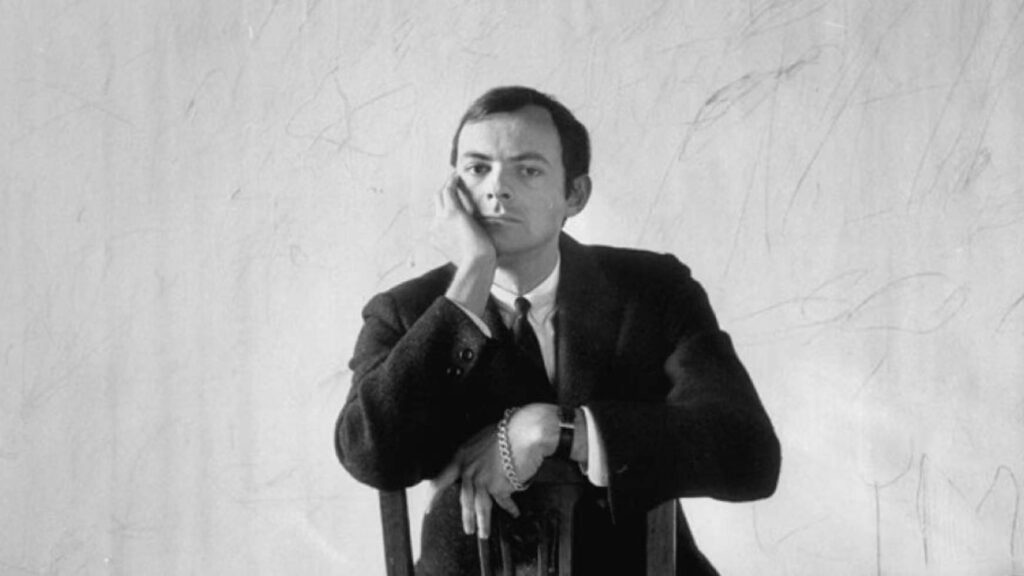
Cy Twombly was born in 1928, originally named Edwin Parker Twombly Jr. At that time, America had just emerged from World War II, and the art scene was experiencing a surge of abstract expressionism. However, Twombly did not receive attention for his abstract style in his youth. In the 1950s, he left New York to study art in sunny Italy, a country rich in historical culture, which influenced his later painting themes, often incorporating Roman mythology and infusing his brushstrokes with the Roman charm he perceived.
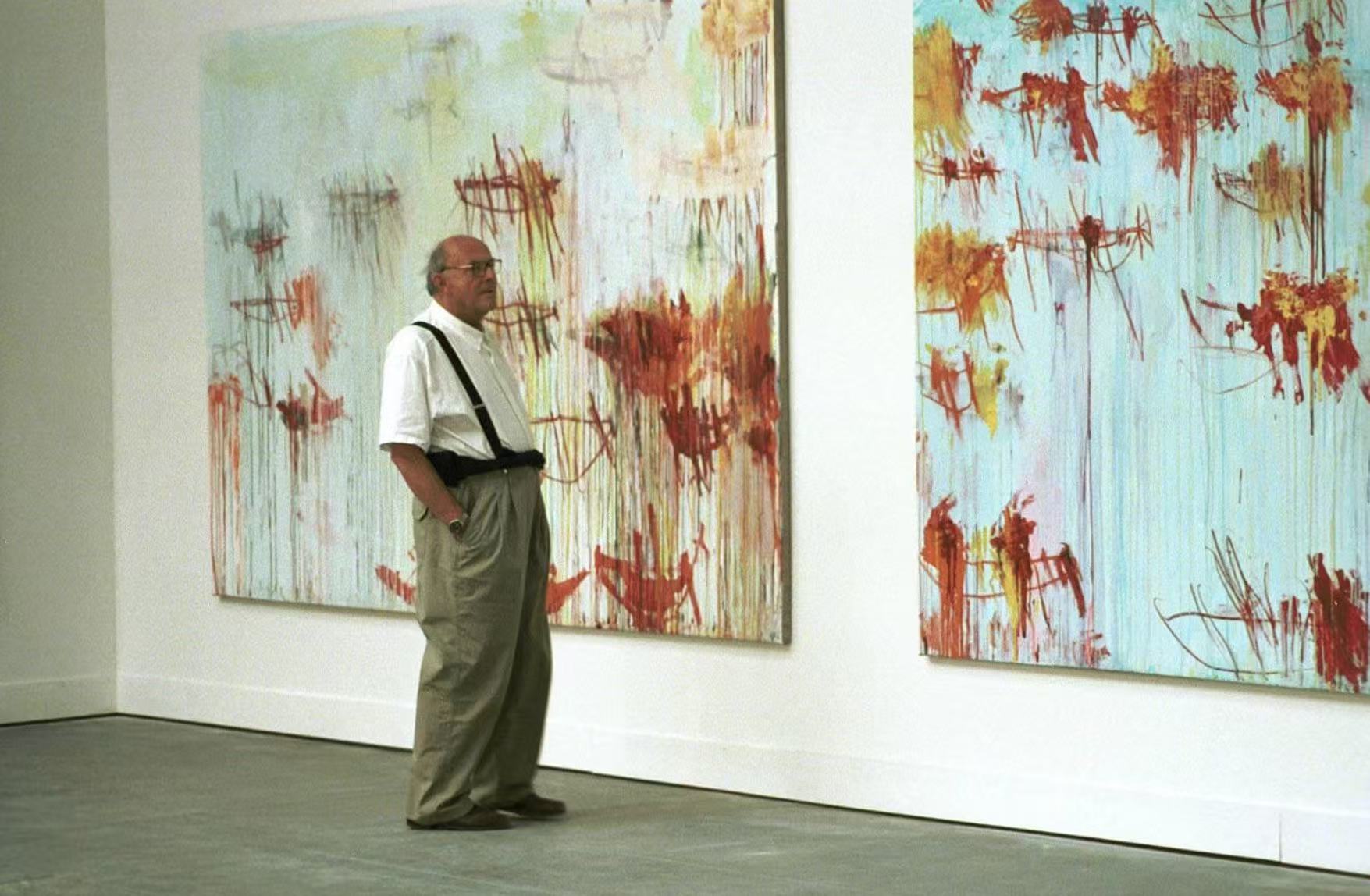
Twombly’s free-spirited graffiti-like brushwork has been highly inspirational to young artists, showcasing emotional strokes filled with human expression. The vibrant, flowing colors seem to narrate intimate thoughts, allowing viewers to empathize with the internal drive that sparked the artist’s creation.
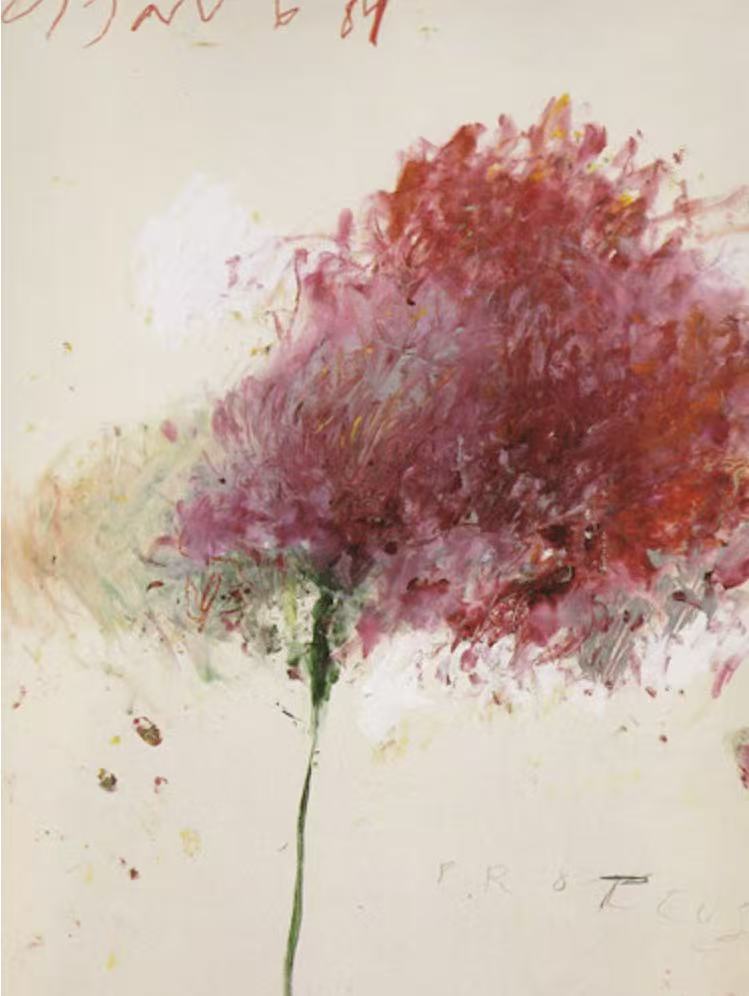

Like many artists, Twombly underwent various transformations throughout different periods—from the black-and-white abstract phase in the early 1950s, through abstract sculptures from 1955 to 1959, to the gray chalkboard paintings from 1969 to 1971, ultimately culminating in the well-known vibrant color style of the 1980s. “Abstract” has always been Twombly’s spiritual vocabulary; his brush follows his heart, repeatedly breaking the boundaries between traditional drawing and oil painting. Twombly once remarked, “My writing appears childish but is by no means immature.” Returning to the innocence of childhood and relying on intuitive actions during the creative process became core principles throughout his artistic career.
Must-Know Cy Twombly Masterpieces
New York City

With a chalkboard as the base, the lines exhibit spontaneity and strong undulations, with some strokes even possessing a sense of departure from the canvas, yet also displaying a heavy stillness. This reflects Twombly’s impression of New York—bustling yet orderly, like a collection of crowded, stark black-and-white photographs
Four Seasons
Spring/Summer
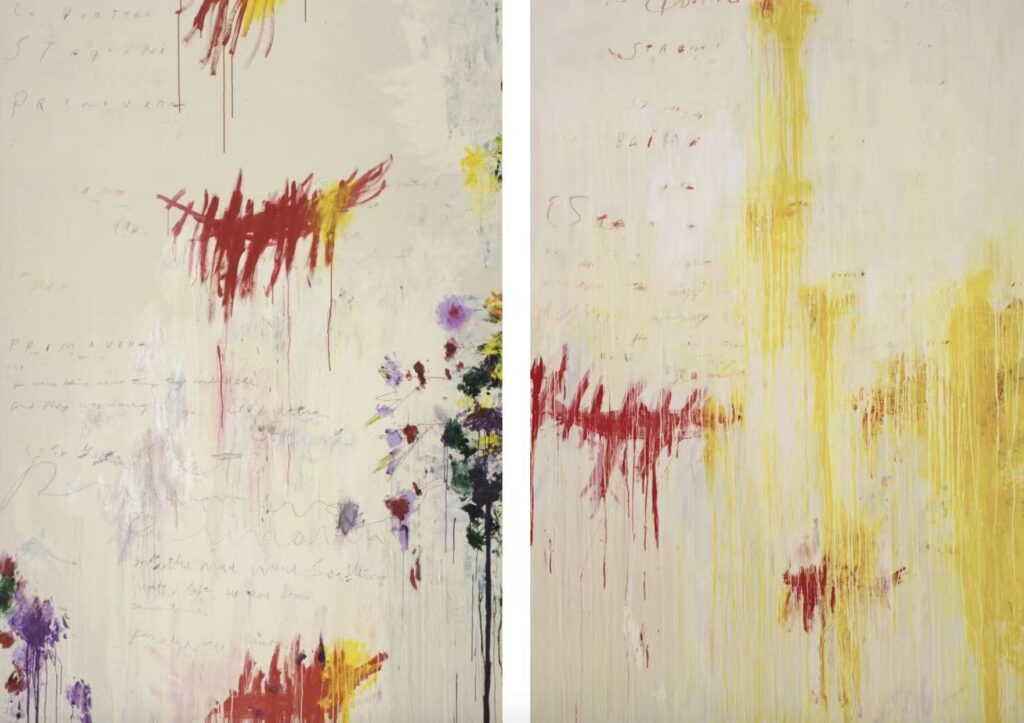
Autumn/Winter
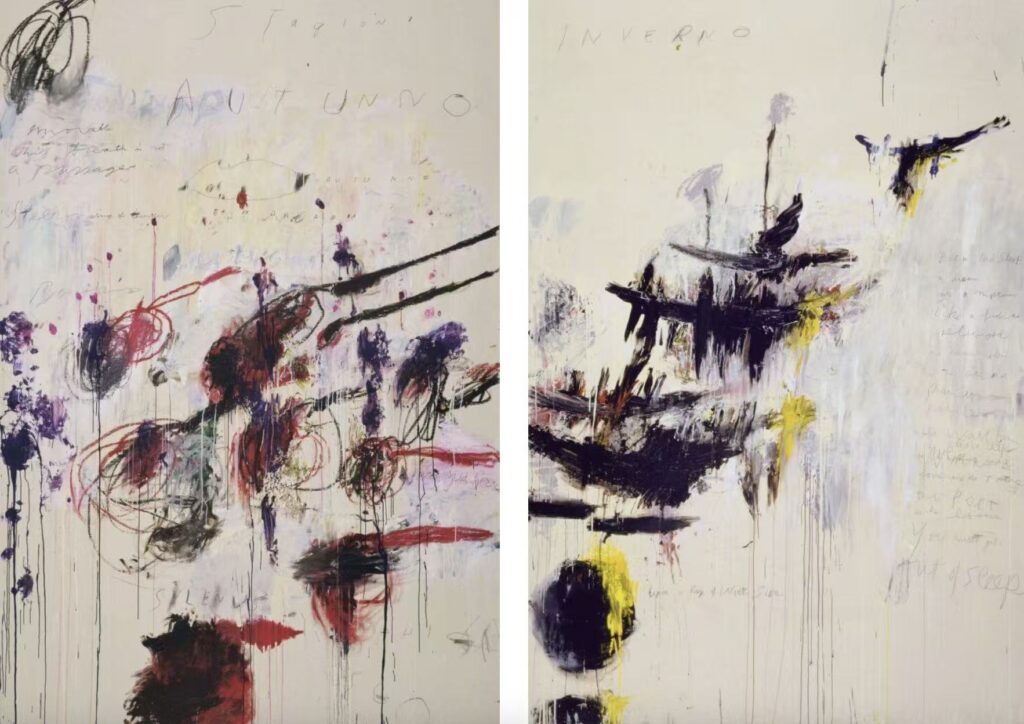
Twombly began creating this series in the summer of 1991 while living in a small town in Italy. The Mediterranean ambiance inspired his desire to express color, depicting the essence of the seasons through storytelling. The works combine graffiti and symbolic text, filled with a sense of flow and an underlying chaos and uncertainty about the future.
The Rose
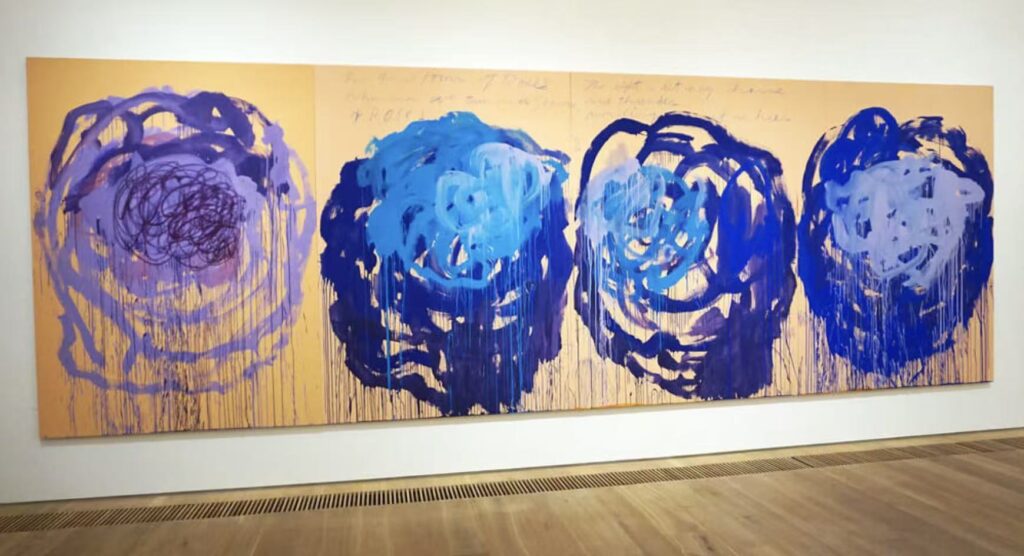
Flowers have always been a favored subject for Twombly, especially roses. This series, painted in his later years, continues his signature technique of allowing paint to flow, creating a dialogue between the flowers and the gravity of nature. The bold and vivid colors retain his highly recognizable style.
Suitable Spaces for Cy Twombly’s Artwork
After understanding the style of Cy Twombly’s work, what types of spaces are suitable for displaying his art? We recommend the following three styles of spaces that correspond to different aspects of Twombly’s works.
Scandinavian Style Space
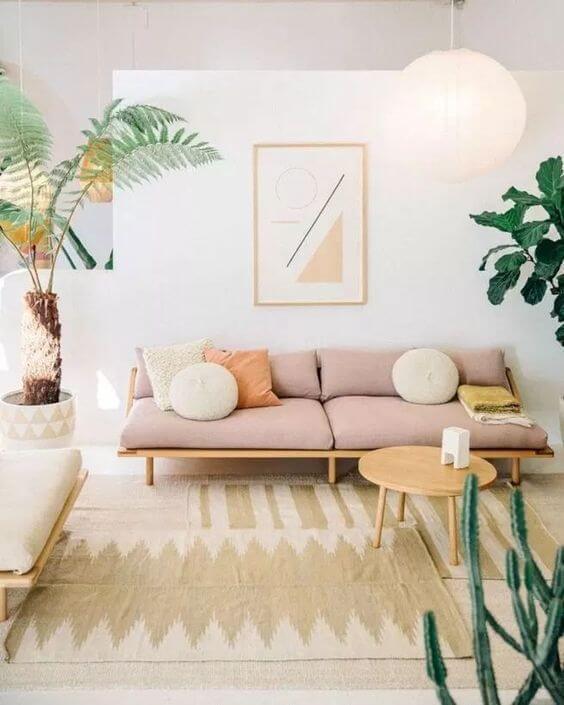
Scandinavian design is known for its “fresh and comfortable” aesthetic, featuring a simple color palette and clean lines. This style is very accommodating to artworks, allowing for harmonious combinations with a variety of styles. Twombly’s mastery of color ranges from vibrant, high-contrast expressions to softer, more romantic works. The soft hues reminiscent of cotton candy are particularly suitable for Scandinavian spaces. Using Ideal House, you can generate this style of interior design with just one click.
Modern Style Space
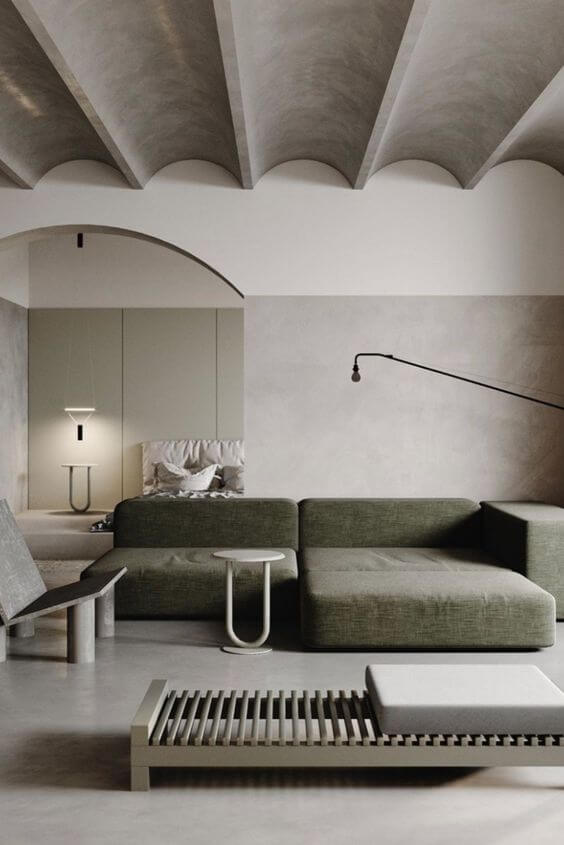
In a modern setting characterized by a stable atmosphere or sleek fashion, Twombly’s work can shine as well. For instance, pieces from his gray chalkboard period in the 1950s, featuring monochromatic backgrounds and strong line expressions, are perfect for entryways or display areas, serving as decorative highlights that draw focus without disrupting the overall ambiance.
Core Principles of Minimalist Style
Before diving into decor, it’s essential to understand the core philosophy of minimalism: “Less is More.” This doesn’t mean the space should be cold or barren, but rather that it emphasizes functionality, quality, and the elimination of non-essentials.
Functionality First: Every piece of furniture and decor should have a clear purpose. Say no to items that are purely decorative or seldom used.
Neutral Color Palette: The foundation of minimalist spaces typically consists of neutral colors like white, beige, gray, and black. These colors create a clean, bright base that makes the space feel more open and airy.
Streamlined Design: Say goodbye to complex carvings and excessive ornamentation. Furniture and items should feature clean lines and simple geometric shapes.
Emphasis on Empty Space: In minimalism interior, “empty space” is itself a form of beauty. Leaving appropriate blank areas allows the visual focus to rest and enhances the overall sense of quality.
Key Elements of Minimalist Home Decor
Wall Colors: Keep it Simple
Choose large-area neutral colors. White walls are the most classic choice, making the room bright and serving as a perfect backdrop for furniture and decor. Light gray or beige can also add warmth and sophistication to the space.
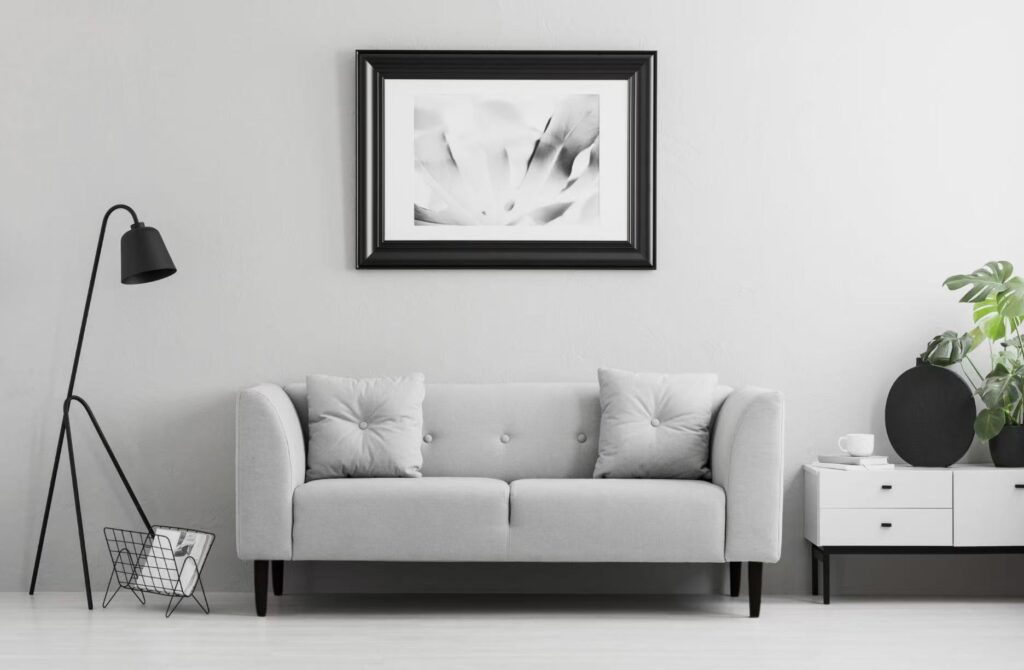
Furniture: The Art of “Less”
Quality over Quantity: Select a few well-designed, high-quality, and functional key pieces of furniture. A simple sofa, a sleek dining table, and a clutter-free storage bed are all excellent choices.
Low-Saturation Colors: Furniture colors should coordinate with the walls, opting for shades like advanced gray, natural wood tones, black, or white.
Elevated Legs: Choosing sofas, beds, or cabinets with elevated legs creates a sense of suspension, making the space appear more spacious and transparent.
Storage: Conceal to Create Order
Clutter is the enemy of minimalism. A good storage system is crucial.
Built-in Cabinets: Utilize walls to create built-in storage cabinets, keeping items out of sight and maintaining surface cleanliness.
Closed Storage > Open Storage: Give priority to closed storage (like cabinets with doors) to hide everyday clutter. If using open shelving, keep the items on display minimal and aesthetically consistent.
Decor & Lighting: Subtle Embellishments
Lighting Design: Use a combination of main lighting, accent lighting, and functional lighting. Simple geometric pendant lights, track lighting, or recessed lights are all great options. Natural light is the best accessory—keep windows simple and let the sunlight pour in.
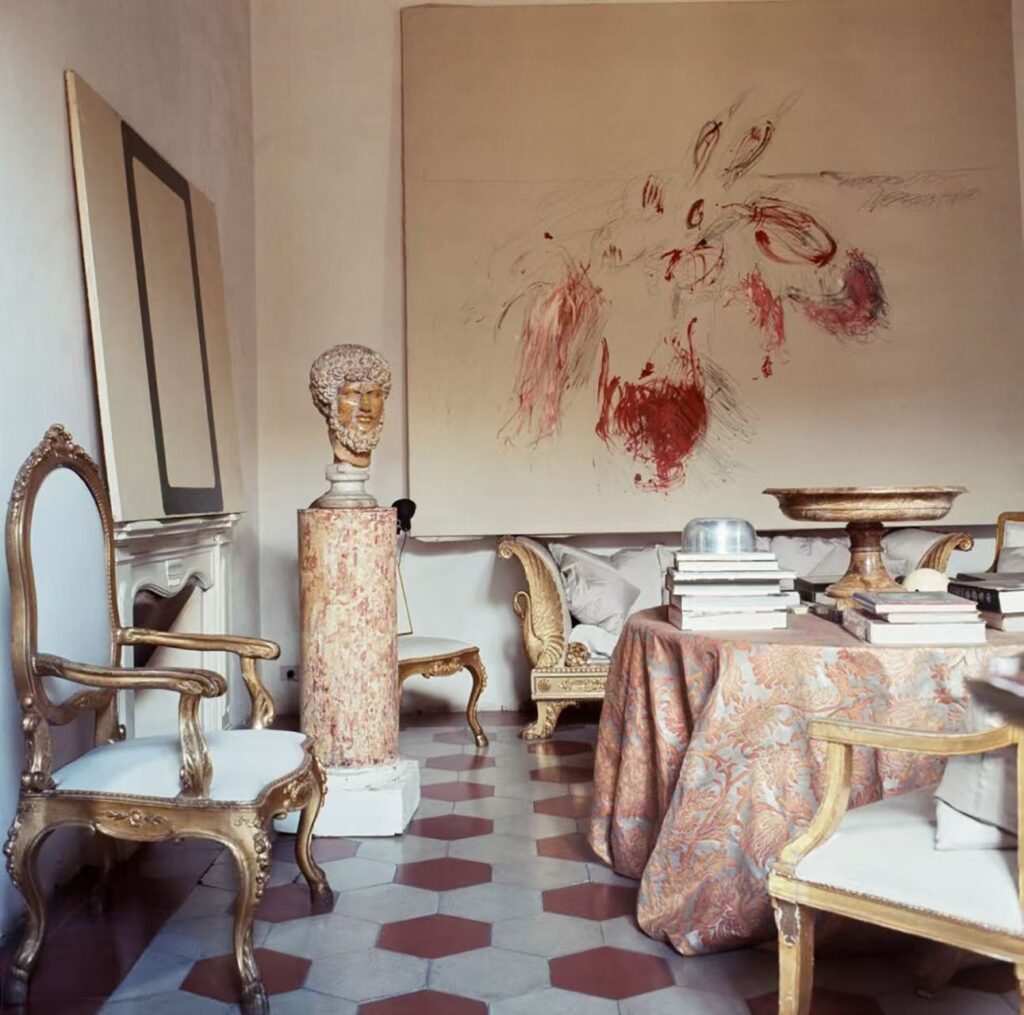
Decorative Elements: A single, bold painting, a vibrant green plant, or a textured simple vase can become the focal point of the space without creating a sense of clutter. Remember the principle: one focal point per area.
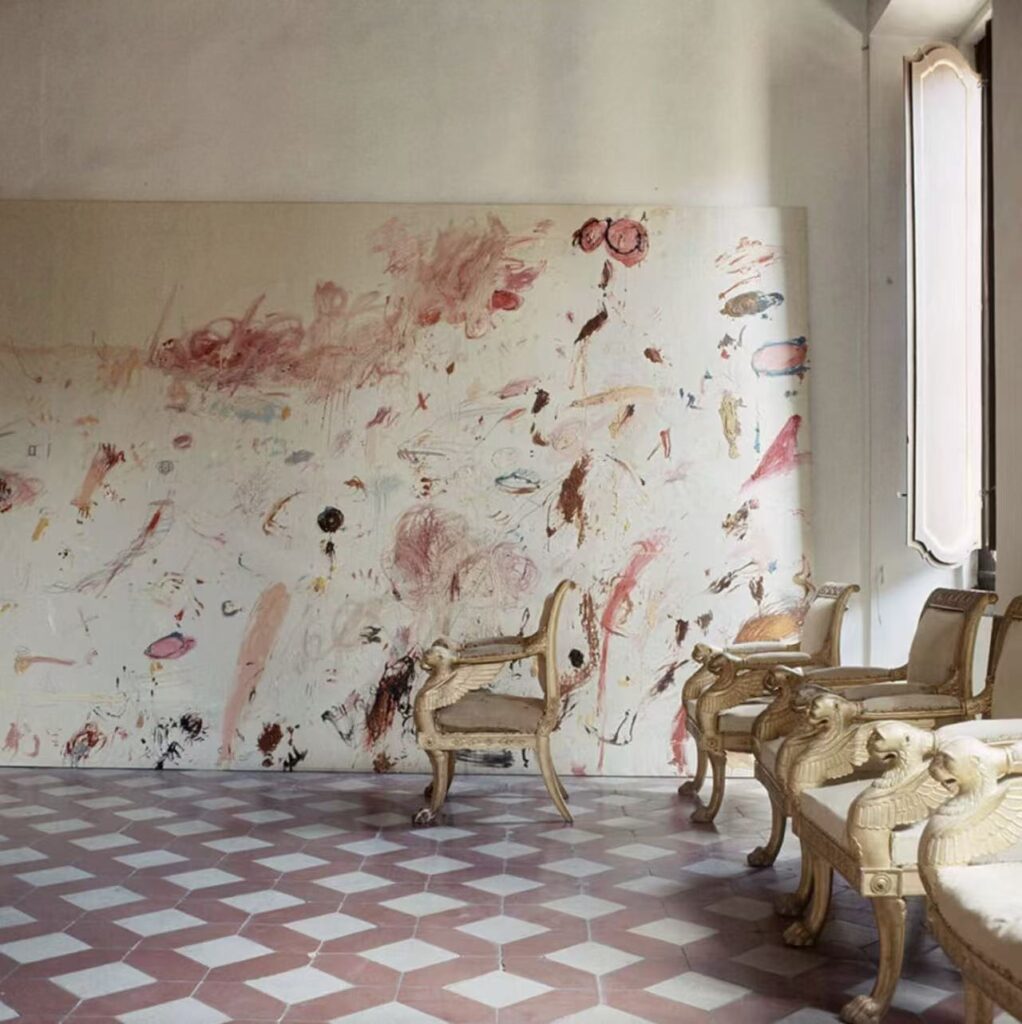
Textiles: Softening the Space
Textiles like curtains, carpets, and bedding should also follow minimalist principles.
Materials: Choose natural fabrics like linen, cotton, and silk.
Colors: Stick to solid colors or simple geometric patterns. Avoid overly bright colors and busy prints.
Practical Tips
Regular Decluttering: Develop the habit of regularly reviewing your belongings and letting go of items you no longer need.
Digital Minimalism: Tidy up the cables for your TV and computer to avoid visual chaos.
Quality over Quantity: When purchasing new items, think carefully about whether you truly need them and prioritize quality and durability.
Conclusion
Incorporating the style of Cy Twombly into your home decor can beautifully align with the principles of minimalist home decor. By emphasizing simplicity, functionality, and the careful selection of art and furnishings, you can create a space that not only reflects your aesthetic taste but also fosters a serene and inviting atmosphere. Remember, minimalism is about appreciating the beauty of empty space and making intentional choices that enhance your living environment. By following the core principles and practical tips outlined in this blog, you can achieve a harmonious balance between artistic expression and minimalist design, ultimately transforming your home into a stylish sanctuary. Embrace the art of “less is more” and let your space breathe with elegance and sophistication.
Leave a Reply