If you are still treating PromeAI, Midjourney, and Stable Diffusion as interchangeable tools in 2026, you are likely burning billable hours. I’m Millie. Trust me, I’ve wasted enough GPU time for all of us to know that while one of these is the undisputed king of “vibes,” another is the only one I’d trust with a structural floor plan.
This isn’t a generic feature list; it’s a hands-on designer comparison where I break down exactly how these giants stack up for architects, concept artists, and developers. I’ll show you the exact cost, the steepness of the learning curve, and the “client-ready” reality so you can build the right tech stack without the expensive trial and error.
Comparison Table Overview
Feature matrix
Here’s the quick “show me the receipts” view based on our testing and recent write-ups from places like PCMag’s AI image generator picks and CNET’s roundups, plus PromeAI’s own feature pages.
| Feature / Tool | PromeAI | Midjourney | Stable Diffusion (SD) |
| Main vibe | Design-focused, especially architecture | Wildly creative, painterly imagery | Hackable engine, huge ecosystem |
| Best for | Architects, interior, product mockups | Concept art, marketing visuals, moodboards | Devs, tinkerers, custom pipelines |
| Control over structure | High (structure tools, ref images, masks) | Medium (good, but more “vibes” than precision) | Very high (if we’re willing to configure a lot) |
| Prompt strictness | Follows references and geometry well | Looser, stylistic interpretation | Depends on model + LoRAs we choose |
| Architecture tools | Strong (facades, interior layouts, styles) | Pretty, but often fantasy–driven | Depends on model: needs add‑ons |
| Learning curve | Moderate, UI is visual | Moderate, Discord-based workflow | Steep, especially for non-devs |
| Integrations | Web app, design‑oriented workflows | Bots / unofficial tools, Discord | APIs, local, plugins, heavy community tools |
| Pricing (2026, approx)* | SaaS tiers, mid-range | Subscription / Fast hours | Engine often free, but infra costs can be real |
| Best overall for architecture | ✅ Our pick | Nice for mood shots | Good with the right model + setup |
*Always double‑check current pricing pages, these shift a lot.
If we only look at the table, PromeAI wins on structured control, Midjourney wins on “wow, that’s pretty,” and SD wins on tinkering.
Scoring methodology
We didn’t just vibe our scores. We built a tiny scoring sheet, then argued over it for a week.
For each tool, we scored from 1–10 on:
- Architectural accuracy (clean lines, believable materials, usable facades)
- Prompt obedience (does it actually do what we ask?)
- Visual quality (lighting, detail, overall polish)
- Speed to usable result (how many generations until we’d send it to a client?)
- Workflow friction (how annoying is it to get images where we need them?)
- Cost per usable image (not just per image, but per image we’d dare present)
Quick snapshot from our tests in late 2025/early 2026:
PromeAI
- Architectural accuracy: 9/10
- Prompt obedience: 8/10
- Visual quality: 8/10
- Speed to usable result: 9/10 for architecture work
We’ve shared our honest scores, now we invite you to test the results. Run your toughest architectural prompt in PromeAI to see if our structural accuracy matches your rigorous standards.
Midjourney
- Architectural accuracy: 6/10 (beautiful, but often impractical)
- Prompt obedience: 7/10
- Visual quality: 10/10 when it hits
- Speed to usable result: 7/10 (we tweak a lot)
Stable Diffusion (good local/hosted setup)
- Architectural accuracy: 7–9/10 depending on model
- Prompt obedience: 8/10 with the right LoRAs
- Visual quality: 7–9/10
- Speed to usable result: 5/10 unless we’ve pre‑tuned everything
So our starting point in this ai image generator comparison: PromeAI for “client‑ready, especially architecture,” Midjourney for “moodboard candy,” SD for “deep control if we’re techy enough.”
Best Use Cases by Role
Architects: PromeAI wins for control
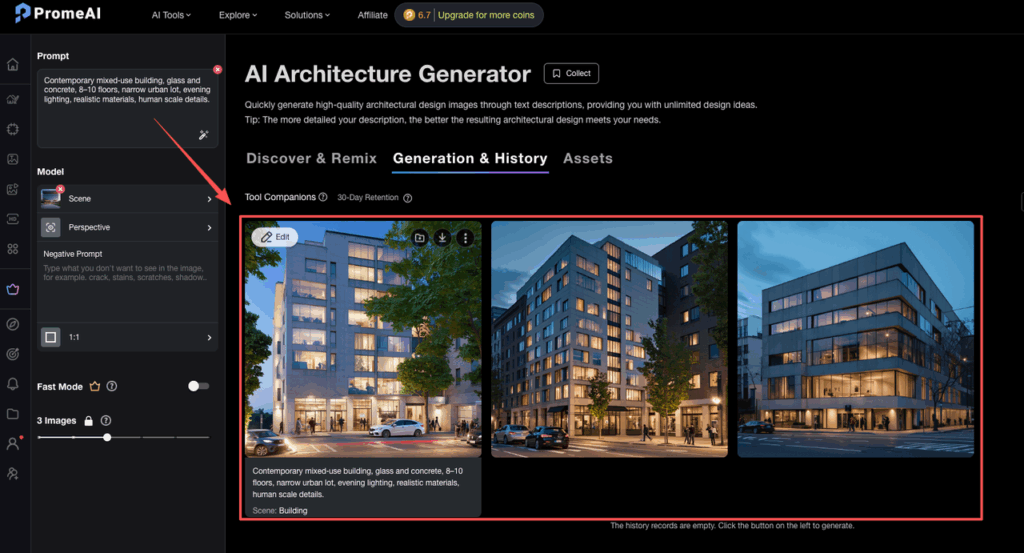
For architecture, PromeAI just feels like it was built by someone who’s actually had to present options on a deadline.
We tested a basic brief:
“Contemporary mixed‑use building, glass and concrete, 8–10 floors, narrow urban lot, evening lighting, realistic materials, human scale details.”
On PromeAI, with its architecture tools on, we could:
- Upload a mass sketch and keep the main volume
- Lock the perspective
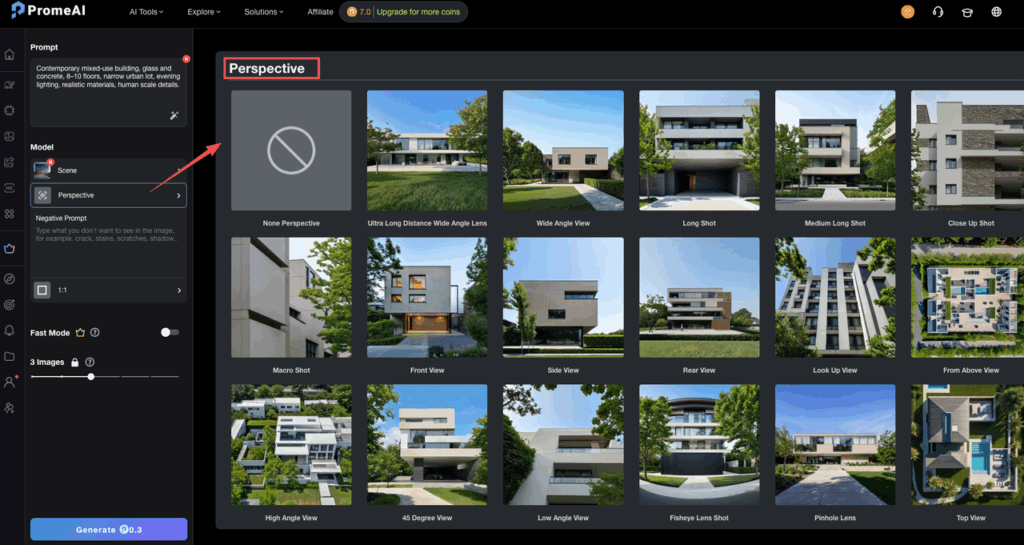
- Swap façade styles (Nordic, brutalist, high‑tech) without breaking structure
The images looked like something we’d actually redline, not just pin to a moodboard.
Why we put PromeAI ahead as best for architecture:
- Strong respect for geometry and grids
- Easier to get consistent views for the same project
- Built‑in features that feel aligned with typical design workflows (facade tweaks, interior suggestions, style variations)
Midjourney, by comparison, gave us gorgeous but often unrealistic buildings: stunning, but with balconies that made no structural sense.
Concept artists: Midjourney for creativity
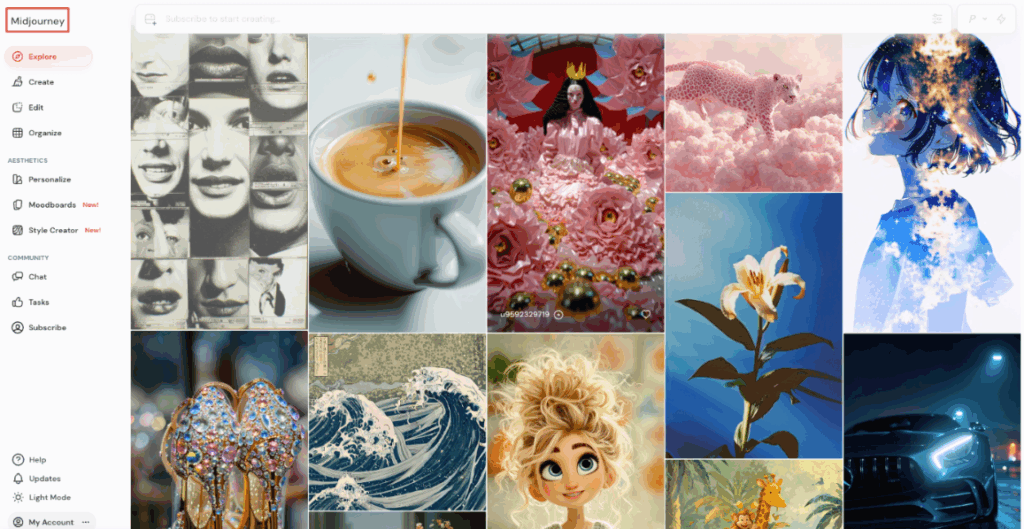
If we drop architecture requirements and just want concept art, Midjourney still goes hard.
We ran a prompt like:
“Futuristic desert city at blue hour, neon accents, cinematic wide shot, highly detailed, film still, volumetric lighting.”
Midjourney’s output had that “poster we’d actually hang” look right away. Colors, atmosphere, mood, it nailed the vibes, even if some details were physically questionable.
Where Midjourney shines for concept artists:
- Rapid style exploration (painterly, anime, photoreal, graphic art)
- Fantastic for client moodboards or pitch decks
- Insanely good lighting and composition out of the box
We still like PromeAI for more grounded visuals, but if the brief is loose and we’re selling a feeling, we open Midjourney first.
Developers: SD for customization
For devs and tech‑savvy teams, Stable Diffusion is still the playground.
We spent a week stress‑testing SD on a local GPU server and a hosted pipeline: custom checkpoints, LoRAs for materials, and control tools for depth and pose.
Why devs in our team keep coming back to SD:
- We can self‑host (big plus for privacy‑sensitive studios)
- We can fine‑tune models on our own material libraries or project history
- We can wire SD into our internal tools and dashboards
The trade‑off: it takes time. This is where the stable diffusion comparison gets real. PromeAI and Midjourney feel like polished apps. SD feels like an engine. If we treat all three as equal “apps,” SD seems annoying. If we treat SD as infrastructure, it suddenly makes sense.
Workflow Friction Analysis
Learning curve
We judge tools by how quickly a new designer on our team can go from “what is this?” to “here’s a presentable image.”
Our rough learning curve notes:
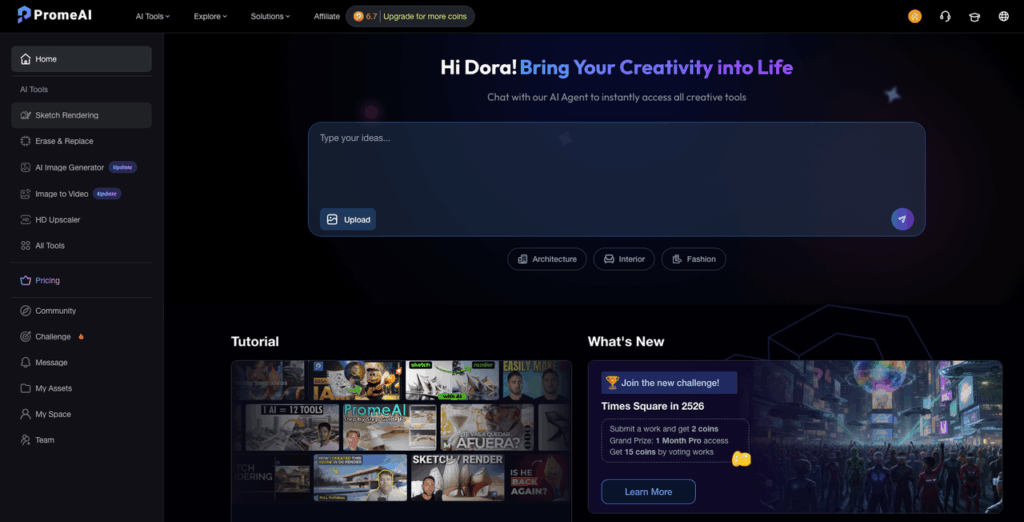
PromeAI:
- 1–2 hours to feel comfortable.
- Clean UI, clear architecture‑centric options.
- Good for people who think in plans, elevations, and views.
Midjourney:
- 1–3 hours, depending on Discord comfort.
- Once we get past the chat‑bot style, prompting is simple.
- Upscaling and variations are fast, but asset management can feel messy.
Stable Diffusion:
- 1 day to weeks, depending on setup.
- With something like AUTOMATIC1111 or ComfyUI, power is huge.
- But new teammates often feel lost in checkboxes and nodes.
So from a workflow friction angle, PromeAI and Midjourney are much kinder to non‑technical designers.
Integration options
We also looked at how easily we can plug outputs into our existing stack.
PromeAI
- Web interface: exports drop into Figma, Photoshop, or BIM workflows pretty fast.
- Strong use case for quick facade or interior passes during design reviews.
Midjourney
- Mainly Discord, though there are third‑party wrappers.
- We usually export and then manage files manually or via cloud storage.
Stable Diffusion
- API‑friendly, great for dev teams building custom tools.
- We’ve wired it into internal dashboards and batch‑processing scripts.
If our team is mostly architects and marketers, we lean PromeAI and Midjourney. If we’ve got dev power, SD opens up some wild automation options.
For reference, design media like ArchDaily’s AI tag shows more and more studios mixing these: off‑the‑shelf services for quick ideas, SD pipelines for long‑term, reusable setups.
Pricing & Real Cost Model
Cost per image comparison
Everyone asks for cost comparison, but per‑image pricing is kind of a trap.
The real question we ask is: “What’s the cost per image we’d actually dare show a client?”
Ballpark based on current/typical pricing (this shifts, so always check official pages):
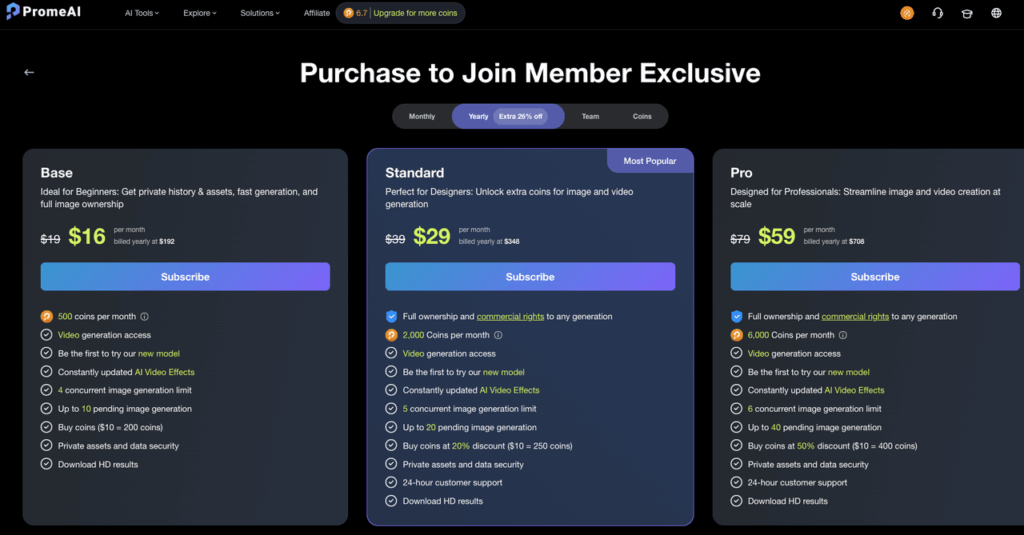
PromeAI
- Subscription tiers with a monthly image allowance.
- Because we get more architecturally usable images, we waste fewer credits.
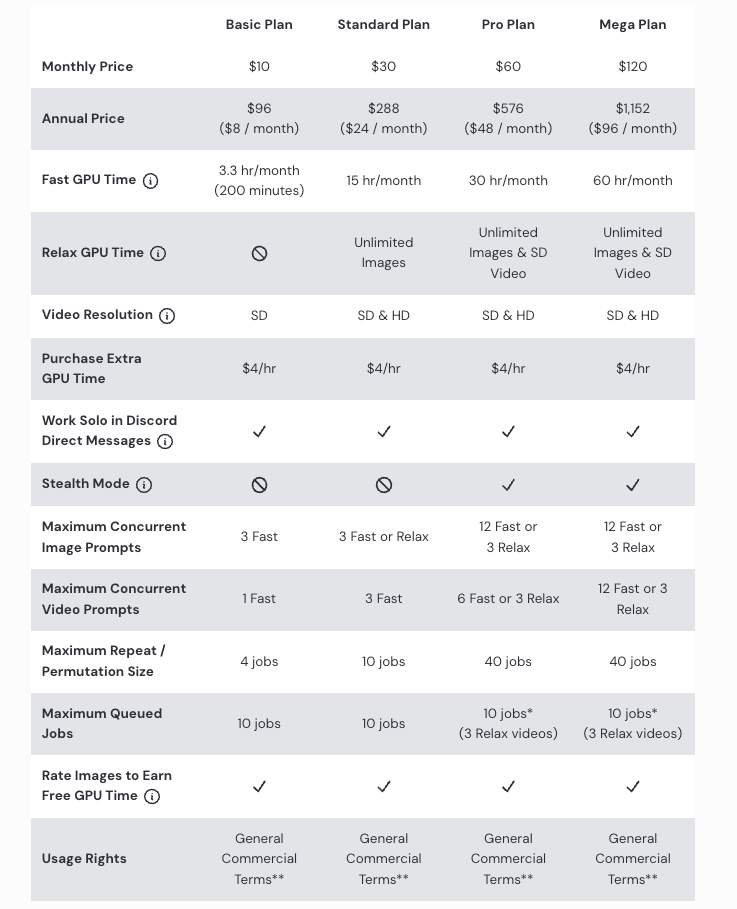
Midjourney
- Subscription with Fast/Relaxed time.
- We often need multiple variations to get something on‑brief, so cost per final pick goes up.
Stable Diffusion
- Engine is free or open in many cases.
- Real cost is GPU time (local hardware or cloud) + setup/maintenance.
In practice, for architecture work, PromeAI gave us a better hit rate. That meant fewer reruns and lower cost per usable render.
Subscription value analysis
We ran a tiny “week in the life” test:
- Mixed architecture / interior / marketing visuals
- 3 designers + 1 dev
- Goal: get 10 client‑ready images per person across different briefs
Our rough experience:
- With PromeAI, we got there fast. Fewer prompt retries, more direct control over structure. Subscription felt fair for the amount of client‑viable output.
- With Midjourney, we generated a lot more images, but also threw out more. Great value for exploration, a bit less efficient for strict briefs.
- With Stable Diffusion, the first week was “investment mode”, time poured into setting up models, LoRAs, and tools. Long term, for high volume teams, that investment could pay off because marginal cost per image gets tiny.
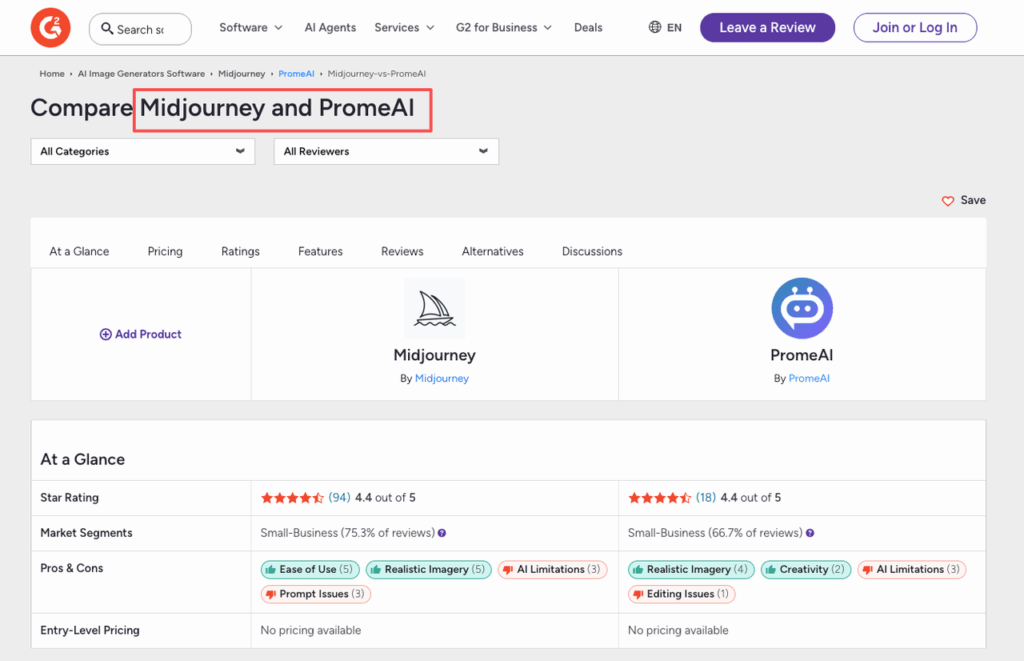
Sites like G2’s Midjourney vs PromeAI comparison show a similar pattern: users praising Midjourney’s creativity, while PromeAI gets love from folks who care about design structure and control.
So our current 2026 view:
- Solo creatives / small studios → PromeAI or Midjourney subscriptions are easier to justify.
- Larger firms with dev teams → A Stable Diffusion pipeline plus a PromeAI/Midjourney seat or two can be a sweet combo.
Test Results with Same Prompts
We promised prompts, so here’s the fun part. We used the same text prompt across all three tools and scored only the first three outputs we got from each.
Prompt 1: Architecture exterior
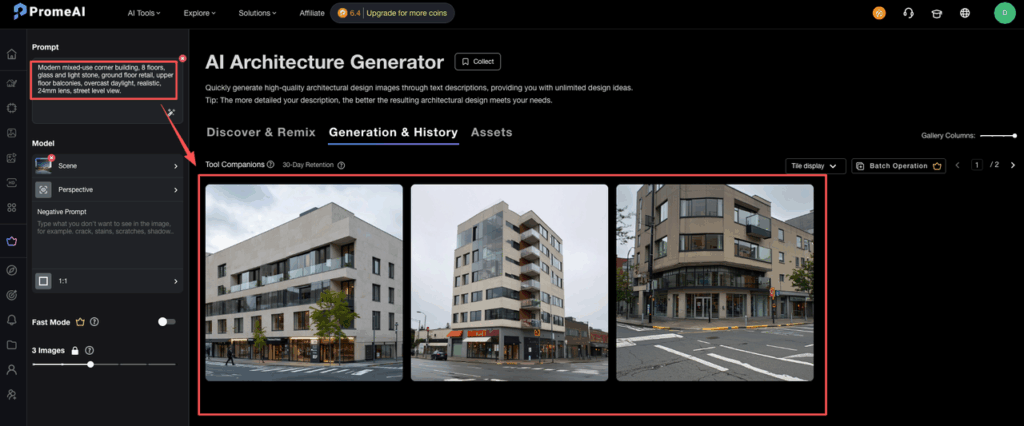
Prompt:“Modern mixed‑use corner building, 8 floors, glass and light stone, ground floor retail, upper floor balconies, overcast daylight, realistic, 24mm lens, street level view.”
PromeAI
- Best balance of structure + realism.
- Balconies actually looked buildable, shop fronts felt grounded.
- Hit “client‑presentation ready” in 2 images.
Midjourney
- Gorgeous, moody lighting, sometimes too dramatic.
- Facade details often got over‑decorated.
- Needed 4–6 tries to land something we’d show a serious client.
Stable Diffusion (with an architecture‑focused checkpoint)
- First output was rough: by image 3–4, very usable.
- With control tools for depth/perspective, we pushed it close to PromeAI’s structural quality, but with more setup.
Prompt 2: Marketing hero visual
Prompt:“Minimal product hero shot, matte black wireless headphones on marble pedestal, soft studio lighting, 8k, ultra detailed, advertising photo.”
PromeAI
- Clean product shots, easy to tweak angles.
- Great for web banners or quick mockups.
Midjourney
- Most artistic results. Strong reflections, gradients, and compositions.
- Slightly more retouching needed on edges and logos.
Stable Diffusion
- Needed fine‑tuning on lighting and materials, but once set, we could batch variations like crazy.
Copy‑paste cheat sheet
If you want to try the same tests, here’s a super simple starter set:
- Architecture prompt (copy‑ready):“Modern mixed‑use corner building, 8 floors, glass and light stone facade, ground floor retail with big windows, upper floors with balconies, overcast daylight, realistic, 24mm lens, street level view, people walking on sidewalk, cars parked along street.”
- Product prompt (copy‑ready):“Minimal studio product shot, matte black wireless headphones on white marble pedestal, soft diffused lighting, subtle shadows, high resolution, advertising photo, clean background.”
No special seeds or arcane flags needed. Just drop these into PromeAI vs Midjourney vs your SD setup and see how your own workflow feels.
If we had to sum it up:
- We reach for PromeAI when structure and accuracy matter.
- We reach for Midjourney when we need quick, beautiful concepts.
- We reach for Stable Diffusion when we want something we can wire into our own tools.
Your turn: Where do you usually get stuck in this workflow, prompting, picking tools, or turning pretty images into something actually buildable?
PromeAI vs Midjourney vs Stable Diffusion: Frequently Asked Questions (2026)
What is the main difference in the PromeAI vs Midjourney comparison for 2026?
In a PromeAI vs Midjourney comparison for 2026, PromeAI focuses on structured, design-first workflows—especially architecture and interiors—while Midjourney excels at highly creative, painterly concept art and marketing visuals. PromeAI aims for client-ready, buildable results; Midjourney prioritizes mood, atmosphere, and aesthetic impact.
Which AI image generator is best for architecture in 2026: PromeAI, Midjourney, or Stable Diffusion?
For architecture, PromeAI usually wins thanks to strong respect for geometry, façade control, and consistent views. Stable Diffusion can match or exceed it with the right checkpoints and control tools, but requires more setup. Midjourney is great for atmospheric architectural moodboards, but often produces less practical, structurally unreliable designs.
How does workflow friction compare between PromeAI, Midjourney, and Stable Diffusion?
PromeAI offers a visual web UI and architecture-focused tools, so most designers feel comfortable within 1–2 hours. Midjourney’s Discord-based interface adds some friction but is still approachable. Stable Diffusion has the steepest curve—tools like AUTOMATIC1111 or ComfyUI are powerful, yet overwhelm many non‑technical users at first.
Is Stable Diffusion cheaper than PromeAI and Midjourney for professional use?
Stable Diffusion’s engine is often free, but real costs come from GPUs, cloud compute, storage, and ongoing maintenance. PromeAI and Midjourney use straightforward subscriptions. For low to medium volume work, SaaS tools are usually simpler and predictably priced; SD becomes cost-effective when teams generate large volumes and can amortize setup time.
How should I choose between PromeAI, Midjourney, and Stable Diffusion for a small studio in 2026?
For small studios without dedicated devs, PromeAI or Midjourney subscriptions are usually the most practical. Pick PromeAI if you prioritize architectural accuracy, product mockups, and client-ready structure. Choose Midjourney if you mainly need striking concept art, campaign visuals, and moodboards, and can tolerate looser control over geometry.
Recommended Reads:
Leave a Reply