Table of Contents
Introduction
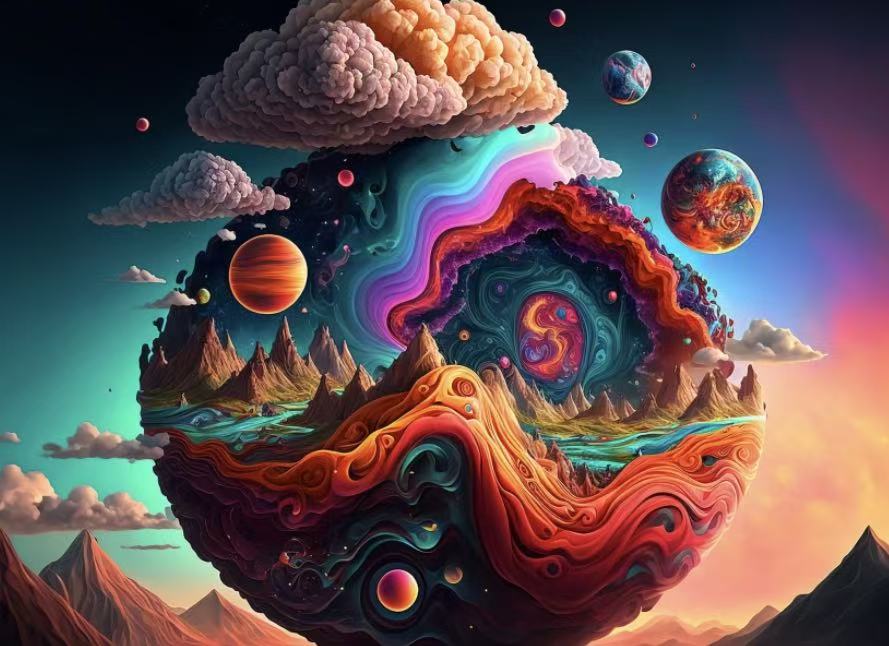
AI Art is revolutionizing the creative landscape, pushing the boundaries of what’s possible in visual expression. As algorithms become more sophisticated and accessible, a new generation of artists is emerging—those who harness artificial intelligence not as a replacement for human creativity, but as a collaborative partner that expands artistic potential. These pioneers are exploring uncharted territories between technology and tradition, creating stunning works that challenge our perceptions of both art and intelligence.
The growing significance of AI in the art world cannot be overstated. From galleries to social media platforms, AI-generated and AI-assisted artworks are gaining recognition for their innovative aesthetics and thought-provoking concepts. This article explores three visionary artists at the forefront of this movement, examining their unique approaches and the ways in which AI serves as a catalyst for extraordinary creativity.
InfiniteYay – The World-Builder
InfiniteYay is an artist and creative director who explores AI as “a catalyst for world-building.” With over 15 years of design experience and a background as a lifelong traditional artist, they bring a deep understanding of artistic fundamentals to their AI Art. Their work has appeared in galleries and exhibitions internationally, celebrating what they describe as “both the wonder and disruption of a world in flux.”
Artistic Style and Approach
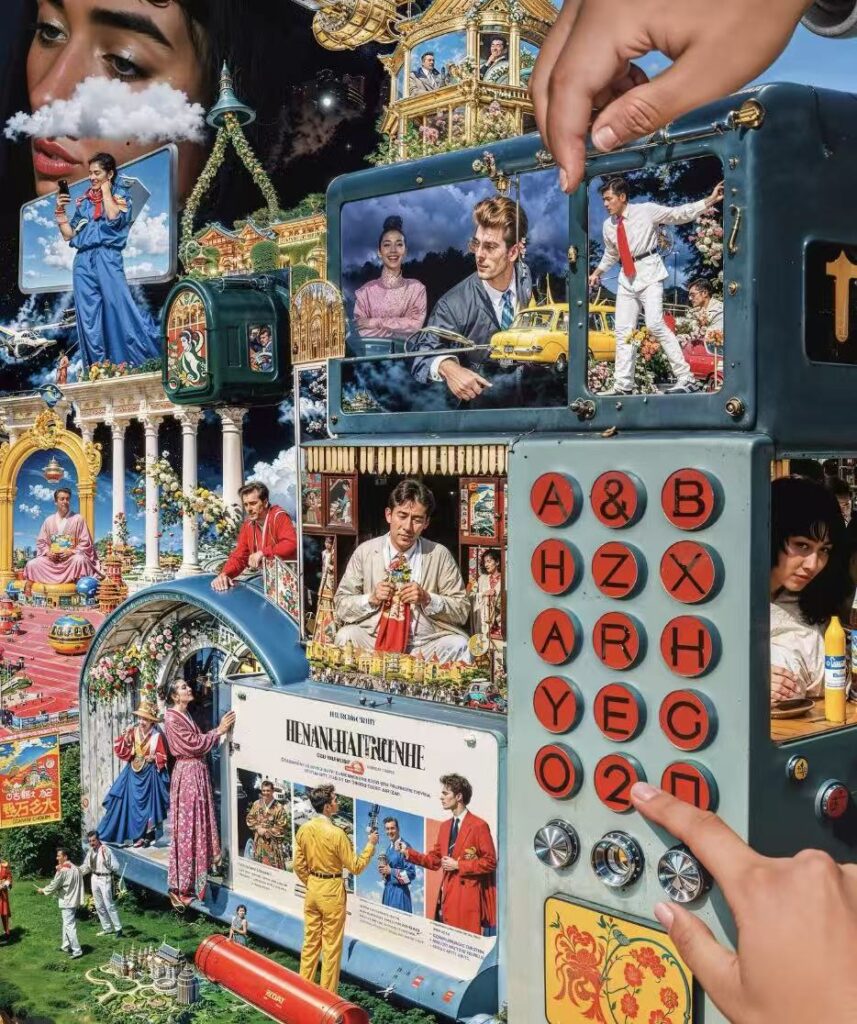
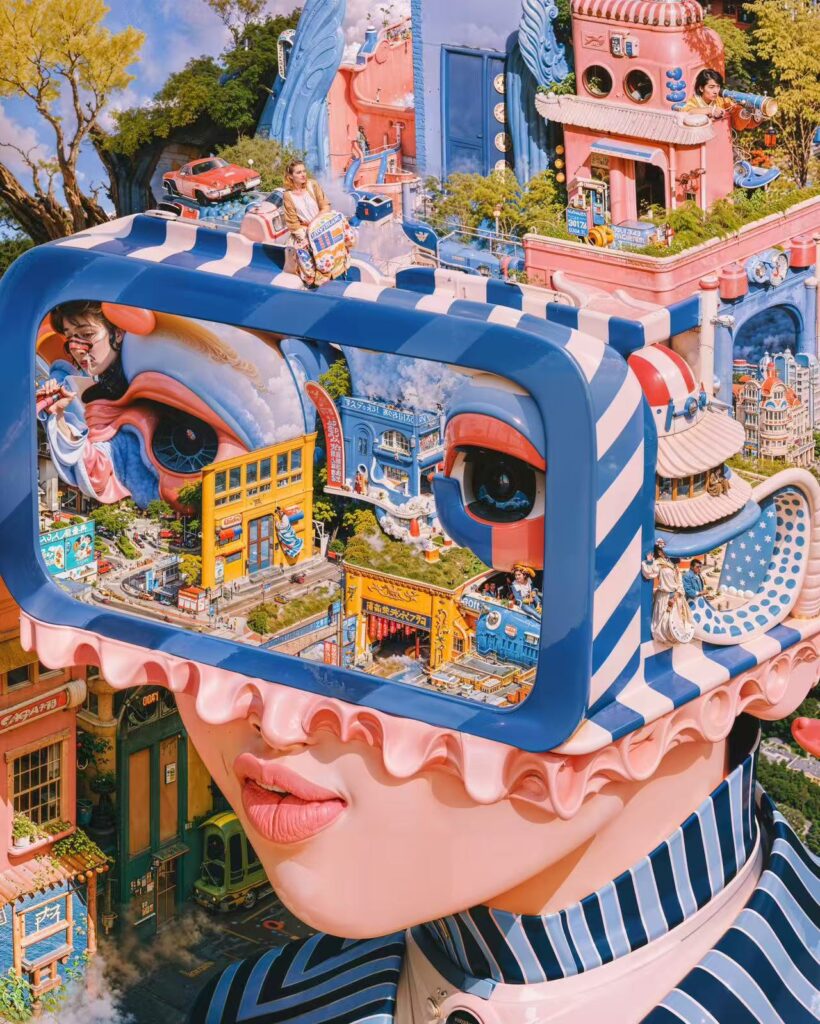
InfiniteYay’s style can be characterized as lush surrealism—creating vibrant, dreamlike worlds that balance familiar elements with unexpected combinations. Their recent series, More Than Ever, reflects on “the overabundance of the AI era,” presenting what they describe as “a landscape of chaotic beauty and constant upheaval, where infinite possibilities collide with the challenge of finding balance.”
Through this series, InfiniteYay explores the overwhelming nature of our current creative moment while simultaneously demonstrating how AI can help artists process and make sense of this complexity. Their work channels what they term “boundless wonder” into cohesive visual narratives that remain accessible despite their intricate details.
Notable Works and Projects
While specific titles for individual works aren’t provided, InfiniteYay’s More Than Ever series represents a significant body of work that has gained recognition in the AI art community. Each piece in this collection serves as a visual meditation on the relationship between technological advancement and human creativity.
AI’s Role in the Creative Process
For InfiniteYay, AI functions as both muse and collaborator. The technology enables the rapid iteration and combination of visual concepts that would be extraordinarily time-consuming using traditional methods. This acceleration allows for what the artist describes as “charting new creative frontiers”—exploring visual possibilities that might otherwise remain inaccessible due to practical constraints.
The AI becomes a partner in what InfiniteYay calls “world-building”—constructing complete visual ecosystems with their own internal logic and aesthetic coherence. This collaborative process between human intention and algorithmic generation results in what they identify as “surreal visuals” that maintain emotional resonance despite their otherworldly qualities.
Eliza McNitt – The Cosmic Storyteller
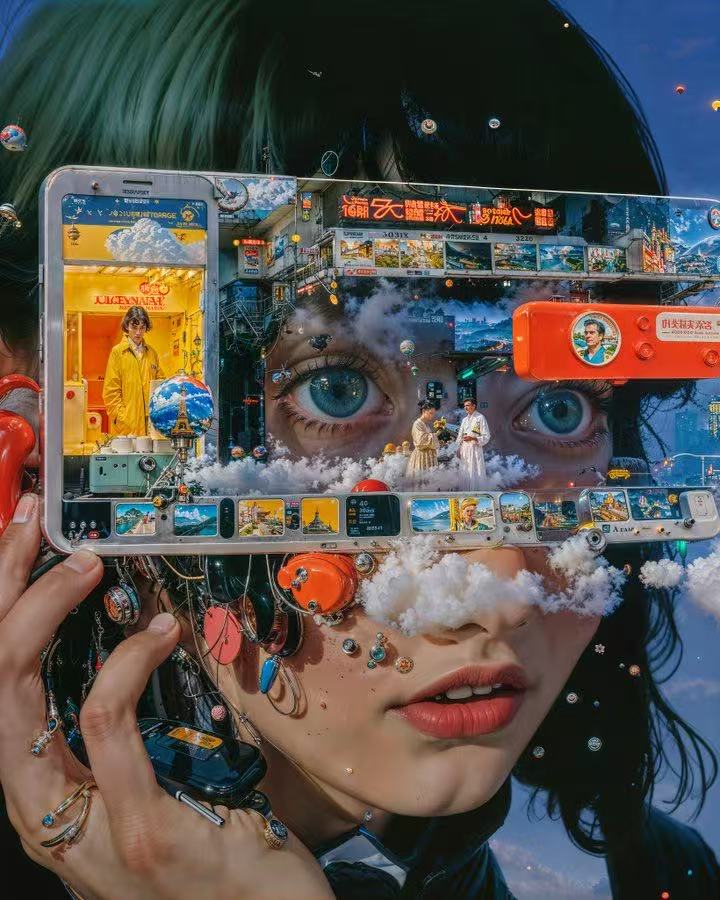
Eliza McNitt is an accomplished filmmaker and artist who harnesses AI to explore profound human experiences through a cosmic lens. Her work demonstrates how artificial intelligence can become a powerful tool for storytelling, particularly when dealing with themes that challenge straightforward visual representation.
Artistic Style and Approach
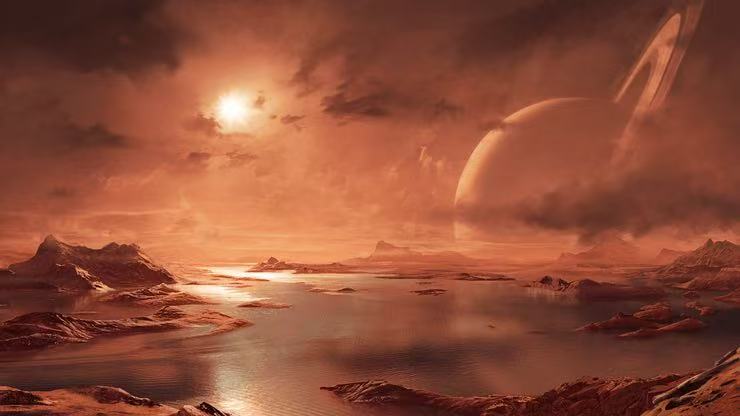
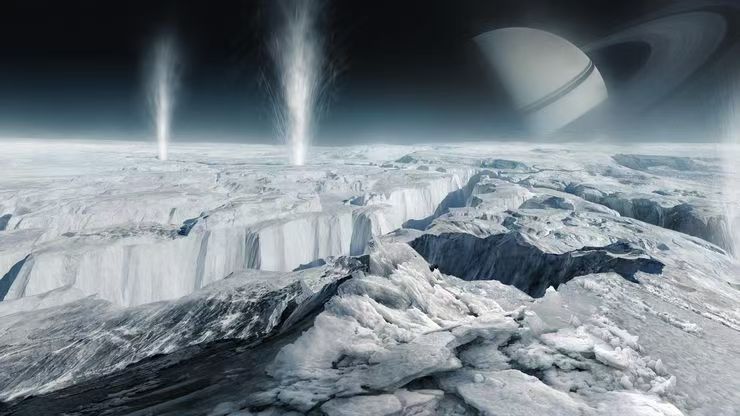
McNitt’s style merges cosmic visual poetry with deeply personal narrative. Her project ASTRA, which she wrote and directed, is described as “a cosmic love story born from a birth story—where ancestral memory becomes a force of survival.” The piece blends live-action filmmaking with generative tools, transforming her mother’s emergency delivery into what she characterizes as “a mythic narrative that channels past matriarchs, dying stars, and the gravitational pull of lineage.”
Her approach represents a fascinating hybrid methodology—what she terms “a hybrid production model”—integrating live-action performance with advanced AI tools and emerging research. This creates a visual language that feels both ancient and futuristic, grounded in human experience yet expansive in its cosmic imagery.
Notable Works and Projects
ANCESTRA stands as McNitt’s most significant AI-art project to date. Brought to life by over 200 artists and debuted through Primordial Soup (a storytelling venture by Darren Aronofsky), the film represents a landmark in AI-integrated cinema. Created in collaboration with Google DeepMind, ANCESTRA reimagines, in McNitt’s view, “what cinema can be when human memory and machine imagination meet—not in opposition, but in orbit.”
AI’s Role in the Creative Process
For McNitt, AI serves as what might be termed a visualization bridge—translating abstract, emotional concepts into stunning visual metaphors. The technology allows her to create imagery that connects personal memory with cosmic scale, giving form to what she describes as the “gravitational pull of lineage.
McNitt’s collaborative approach with AI fosters what she sees as “new interdisciplinary collaborations” and “cutting-edge innovations.” Rather than using AI merely as a tool for generating visuals, she integrates it throughout the creative process, resulting in what she identifies as a seamless fusion of “human memory and machine imagination”.
GLΛ55HΣΛD (Maciej Tarnowski) – The Material Philosopher
GLΛ55HΣΛD, the creative alias of Maciej Tarnowski, is a Polish graphic designer and art director with a lifetime fascination for visual arts. With a background in Fine Arts and years of experience working with leading agencies and global brands, Tarnowski brings a sophisticated design sensibility to his AI-art practice.
Artistic Style and Approach
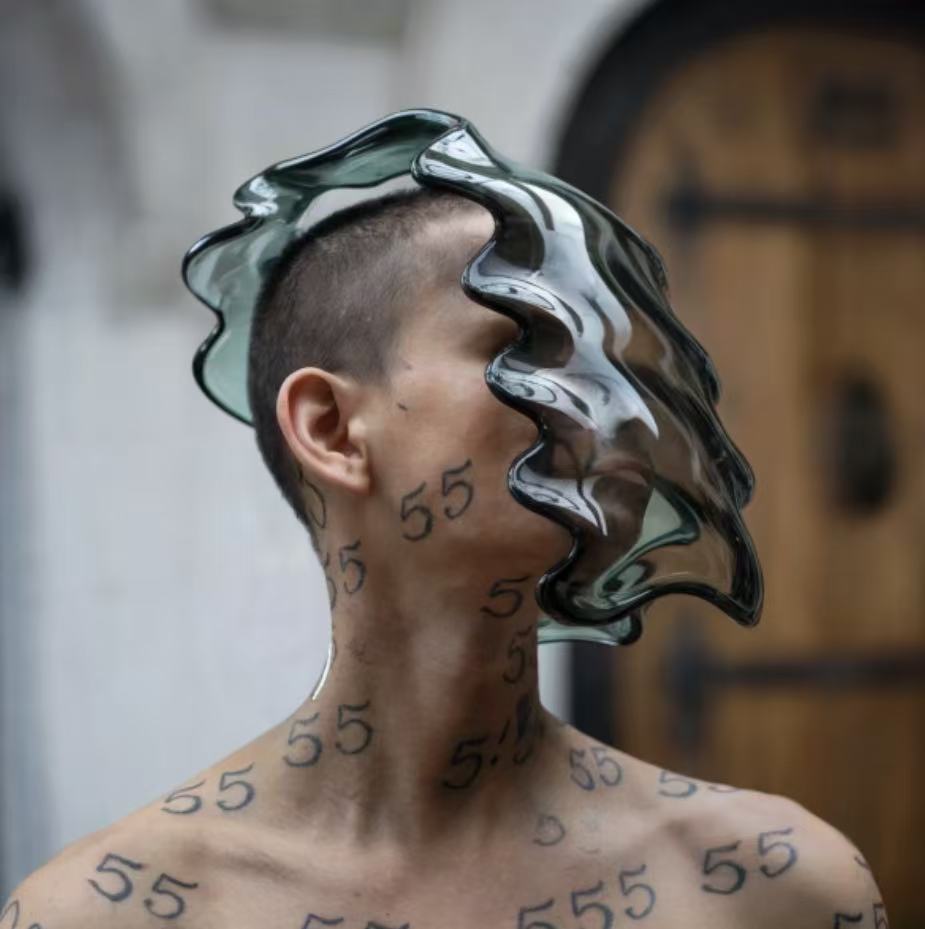
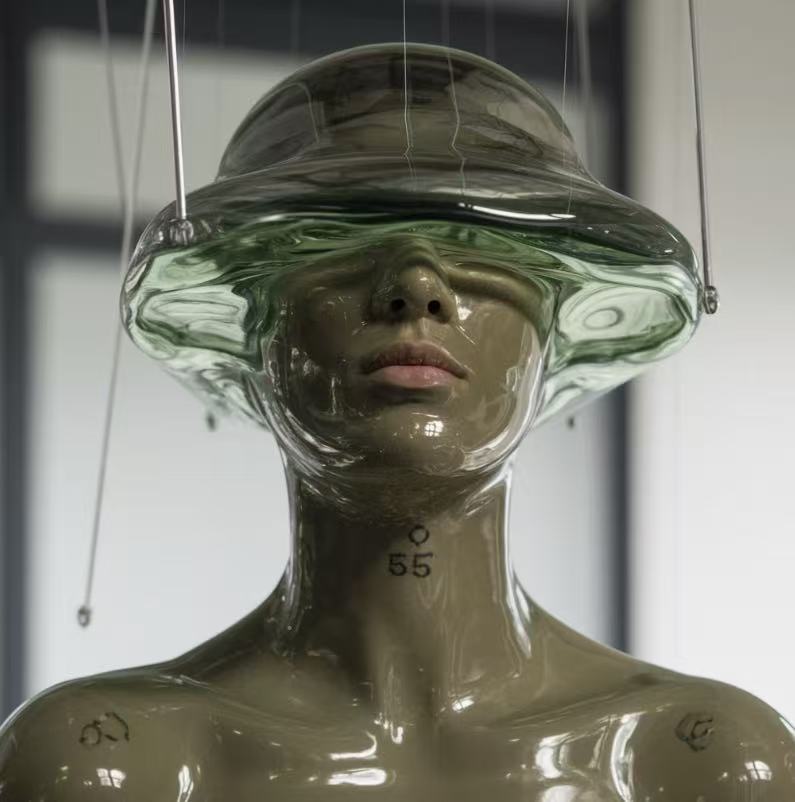
At the heart of all Tarnowski’s work is what he identifies as a singular material obsession: glass. He explores this element as “a symbol of fragility, clarity, and transformation.” His AI-assisted creations examine how glass’s ability “to reflect, distort, and fracture reality” can mirror our own perceptual processes.
Tarnowski describes his creative process as creating “images that invite viewers to look deeper, beyond the surface, into a space where design meets perception.” His work with AI allows him to manipulate virtual glass elements in ways that would be difficult or impossible with physical materials, exploring the boundaries between solidity and transparency, reflection and distortion.
Notable Works and Projects
While specific project titles aren’t provided, Tarnowski’s body of work under the GLΛ55HΣΛD identity represents a coherent exploration of his glass obsession. Each piece continues his examination of how surfaces both reveal and conceal, creating what he describes as artistic spaces “where design meets perception”
AI’s Role in the Creative Process
For GLΛ55HΣΛD, AI functions as what could be called a digital material simulator—allowing him to experiment with glass-like properties in impossible configurations. The technology enables him to create “fractured perceptions” and explore “reflective, distortive surfaces” that challenge how viewers understand reality.
The AI becomes an accomplice in Tarnowski’s philosophical investigation of perception itself. By generating complex glass structures and interactions with light, the technology helps him create works that, in his words, “fracture reality” and invite viewers to “look deeper, beyond the surface” of both the artwork and their own perceptual habits.
The Transformative Power of AI in Artistic Practice
These three artists represent just a fraction of the creative possibilities emerging from the collaboration between human artists and artificial intelligence. Across their diverse practices, several key patterns emerge that highlight AI’s transformative role in contemporary art.
AI as Creative Amplifier
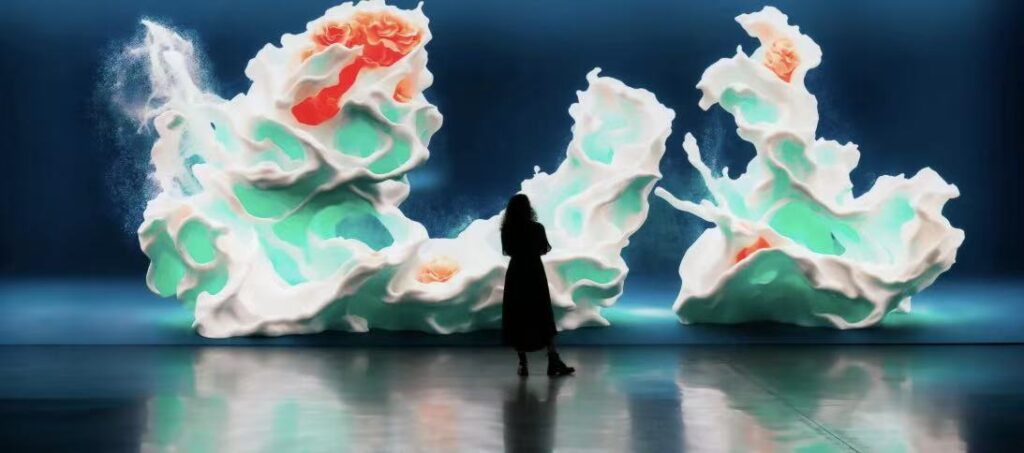
Rather than replacing human creativity, AI serves to amplify it. As noted in a survey about AI art, most people “disliked the idea of AI-generated art” but “were open to AI-generated art so long as there was an artist involved, heavily guiding and prompting their chosen platform.” This reflects exactly the approach taken by the artists profiled here—they’re not letting the AI create autonomously, but rather using it as what one Medium user described as a “creativity amplifier”.
Expanding Visual Vocabulary
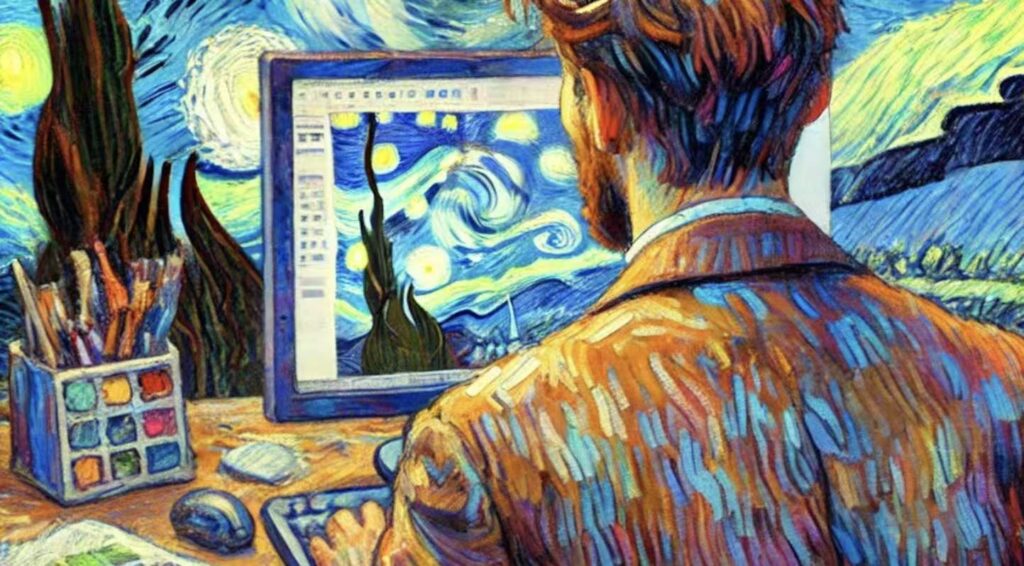
AI tools enable artists to develop and articulate a more sophisticated visual vocabulary. One longtime creative professional reported that after working extensively with Leonardo AI, they noticed their “hand-drawn sketches were improving” and their “eye for composition was sharper.” They attributed this growth to the way AI tools force artists “to become incredibly specific about what you want.”
As they explained: “You have to break down your vision into concrete, describable elements. Want a moody atmosphere? You need to specify whether that’s ‘golden hour lighting with long shadows’ or ‘overcast sky with muted colors’ or ‘dramatic chiaroscuro lighting with high contrast.’”
Democratizing Complex Techniques
AI makes visually complex techniques more accessible to artists without years of technical training. GLΛ55HΣΛD can manipulate glass-like properties without mastering glassblowing; InfiniteYay can build entire worlds without painting every element; McNitt can generate cosmic imagery without advanced 3D rendering skills. This technical democratization allows artists to focus more on conceptual development and aesthetic decisions.
The Human-AI Collaboration
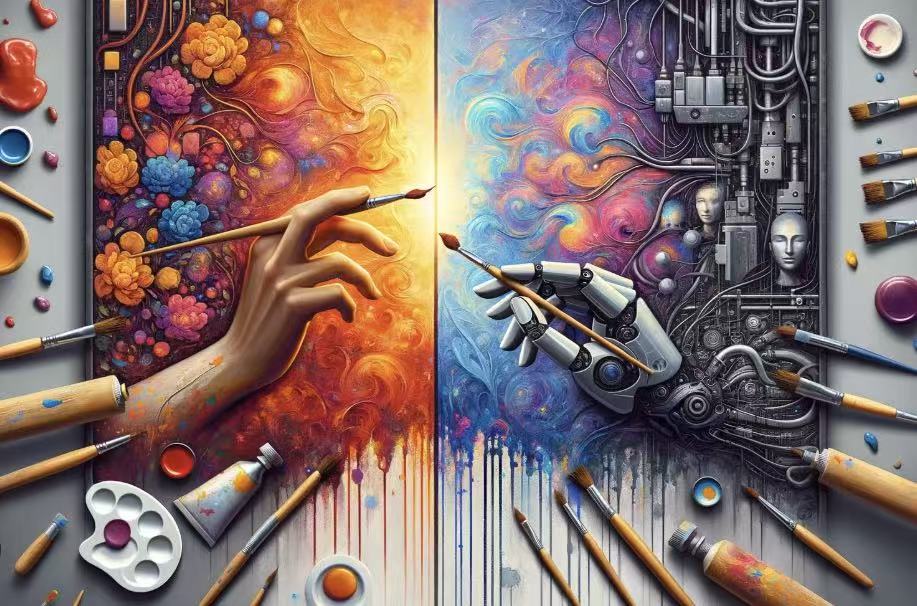
The most successful AI art emerges from a collaborative process between human and algorithm. As one artist described it: “I realized I wasn’t using PromeAI as a tool in the traditional sense. I was collaborating with it.” In this collaboration, “I brought intentionality, taste, and strategic thinking. The AI brought unlimited exploration capacity, freedom from creative blocks, and exposure to visual combinations I’d never think to try.
The Future of AI Art
As AI technology continues to evolve, its role in artistic practice will likely deepen and diversify. Platforms like PromeAI are already making advanced AI art tools accessible to millions of creators.
The philosophical questions raised by AI art will continue to provoke discussion. As one BBC article noted: “Will AI algorithms and robots like Ai-Da spell the end of human creativity and artistry, or can they be harnessed to augment our own creative potential?” The artists profiled here clearly demonstrate the latter—showing how AI can enhance rather than replace human creativity.
Marcus du Sautoy, a mathematician at the University of Oxford, suggests that “AI might help us to stop behaving like machines…and kick us into being creative again as humans.” He sees it as “a powerful collaborator in the pursuit of human creativity.”
Conclusion
The work of InfiniteYay, Eliza McNitt, and GLΛ55HΣΛD represents the vanguard of AI-assisted art—demonstrating how artificial intelligence can expand creative possibilities rather than constrain them. Their diverse approaches show that AI isn’t a monolithic tool producing uniform results, but rather a flexible technology that adapts to and enhances individual artistic visions.
As these artists demonstrate, the most compelling AI art emerges from a genuine collaboration between human intention and algorithmic execution. The future of AI Art lies not in automation but in amplification—using these powerful tools to extend the reach of human creativity into territories previously unimaginable.
Leave a Reply